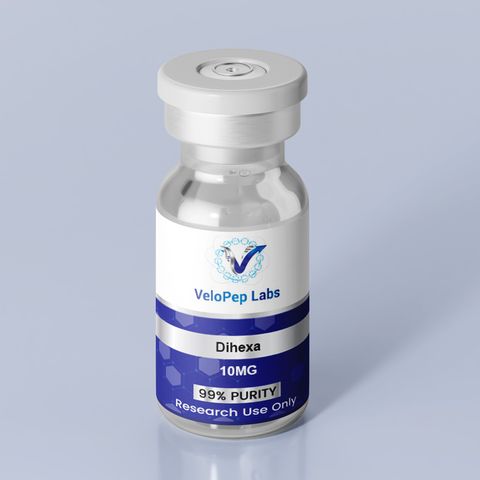
Dihexa (N-Hexanoic-Tyr-Ile-(6) Aminohexanoic Amide)
Cognitive Research Hexapeptide
CAS: 1401708-83-5
Dihexa (PNB-0408) is a modified peptide derivative of angiotensin IV (Ang IV), developed at Washington State University by Dr. Joseph Harding's laboratory. Structurally it is N-hexanoic-Tyr-Ile-(6)-aminohexanoic amide — Ang IV's bioactive core stabilized with hexanoic-acid modifications at both termini for protease resistance. Mechanistically, Dihexa binds hepatocyte growth factor (HGF) with picomolar affinity (Kd ≈ 65 pM) and potentiates HGF's activity at its receptor c-Met, driving downstream synaptogenesis, dendritic spine formation, and procognitive signaling. Critically, Dihexa demonstrates oral bioavailability and blood-brain barrier penetration in rodent models — properties that distinguish it from the vast majority of short peptides, which require parenteral administration to achieve meaningful CNS exposure.
Key Research Findings:
- In neurotrophic-activity assays, Dihexa was reported to be ~7 orders of magnitude (≈10-million-fold) more potent than BDNF at promoting new synapse formation in hippocampal cultures
- Binds HGF with high affinity (Kd ≈ 65 pM), positioning it as a positive allosteric potentiator of HGF/c-Met signaling rather than a direct c-Met agonist
- Aged-rat Morris water-maze studies showed significant restoration of spatial learning versus age-matched controls following oral administration
- Primary hippocampal neuron cultures exposed to Dihexa exhibited measurable increases in dendritic spine density within 24–48 hours of treatment
- Pharmacokinetic profiling in rats demonstrates oral bioavailability and measurable CNS exposure — uncommon for peptides of this size and a deliberate design goal of the hexanoic-acid terminal modifications
For laboratory and research use only.
Ships tomorrow
Today's 2:30 PM EST cutoff has passed

Documented Studies & Applications
This peptide is intended for laboratory research purposes only. Below are documented research applications.
Storage & Reconstitution
Storage Conditions
Store lyophilized peptide at -20°C for long-term storage (up to 24 months). For short-term storage (up to 4 weeks), 4°C is acceptable. Keep away from light and moisture.
Reconstitution
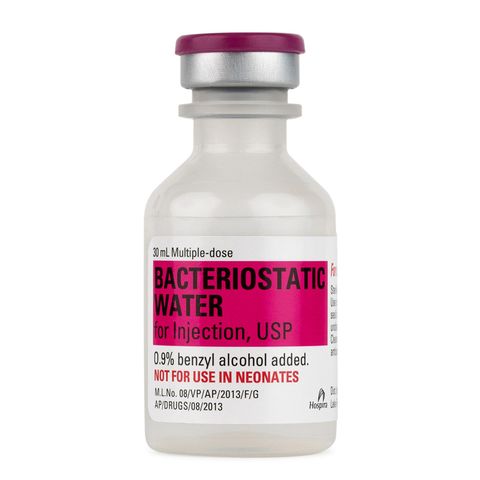
Reconstitute with bacteriostatic water or sterile water. Add solvent slowly down the side of the vial. Do not shake vigorously. Store reconstituted peptide at 4°C.
Handling Precautions
Handle with appropriate laboratory safety equipment. This product is for research use only and not for human consumption.