NEW
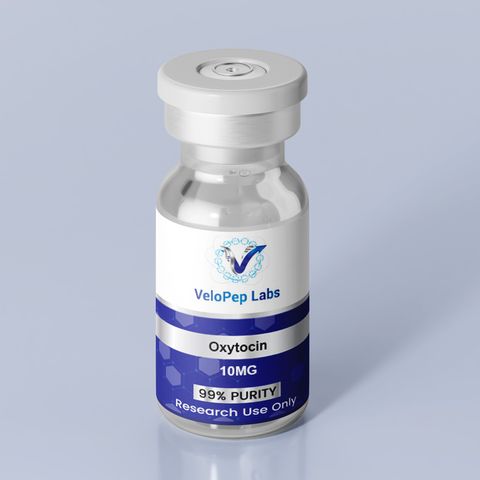
Oxytocin Acetate
神経ペプチドホルモン • 9アミノ酸
CAS: 50-56-6
$55.99
per 10mg vialオキシトシンは、視床下部の傍室核と視交叉上核で合成される9アミノ酸環状神経ペプチドで、下垂体後葉から全身循環に放出されます。**オキシトシン受容体(OXTR)**に作用します。これはGq/11共役GPCR で、生殖組織、扁桃体、側坐核、前頭前皮質および脳幹核全体に発現しています。分娩と泌乳の古典的な役割を超えて、オキシトシンは社会認知、ペア結合、愛着および不安低減研究において最も広く研究されている神経ペプチドの1つとなり、数千の査読済み前臨床および臨床研究がげっ歯類、非ヒト霊長類およびヒトモデルにわたって報告されています。
主要な研究知見:
- プレーリーハタネズミのペア結合研究は、側坐核および腹側淡蒼球におけるOXTR発現を介した一夫一婦性愛着形成におけるオキシトシンの因果関係を確立しました
- 鼻腔内オキシトシンに関するヒト研究は、複数のランダム化プロトコルにおいて顔の感情認識の改善および信頼関連の意思決定の増加を報告しています
- 扁桃体焦点のfMRI研究では、単一の鼻腔内投与後に恐怖刺激への反応性の低下を示し、不安低減研究への下流への影響があります
- 受容体結合アッセイは、構造的に関連するバソプレッシン受容体(V1aR、V1bR、V2R)に対する選択性を持つOXTRで**低ナノモル範囲のKd値(約1~2 nM平均、研究全体で0.56~約9 nMの報告値)**を報告しています
- 分娩研究は、Gq共役PLC/IP3/Ca²⁺シグナル伝達を介した用量依存的な子宮平滑筋収縮を実証しています
研究室および研究用途のみ。
主な特徴
99%純度
凍結乾燥
サイズを選択
1
明日発送
本日の東部時間 午後2:30 の締め切りは終了しました
Free Shipping $250+
Ships tomorrow

製品仕様
技術仕様と純度分析
化学特性
分子式C43H66N12O12S2
配列Cys-Tyr-Ile-Gln-Asn-Cys-Pro-Leu-Gly-NH2 (Cys1–Cys6 disulfide)
保存-20°C、光から保護
純度分析
HPLC純度
合格≥99%
外観白色凍結乾燥粉末
溶解性滅菌水に可溶
研究応用
実証済みの研究と応用
本ペプチドは研究室研究目的のみを想定しています。以下は実証済みの研究応用です。
Social cognition and behavior studies
Pair-bonding and attachment research (prairie vole models)
Anxiolytic mechanism investigations (amygdala fMRI)
OXTR receptor pharmacology
Parturition and lactation research
取り扱いガイドライン
保存と再構成
保存条件
凍結乾燥ペプチドを-20°Cで長期保存(最大24ヶ月間)します。短期保存(最大4週間)の場合、4°Cで保存できます。光と湿気から遠ざけてください。
再構成
バクテリオスタティック水または滅菌水で再構成します。ビアルの側面にゆっくり溶媒を加えます。激しく振らないでください。再構成したペプチドを4°Cで保存します。
取り扱い上の注意
適切な実験室安全機器を使用して取り扱ってください。本製品は研究用であり、人間の摂取用ではありません。
FREQUENTLY BOUGHT TOGETHER
Complete Your Order
Bundle total for 4 items
$255.96他にも検討する価値があります
関連製品
サイズ:
$55.99
1